
Even in a digital world, most companies in Indonesia still deal with a lot of paper. Contracts, tax records, HR files, invoices, customs documents and board papers all pile up quickly. For multinational companies with an office in Jakarta, the question isn’t whether to keep these documents, but where and how.
Office space in Jakarta isn’t cheap. Filling a room with filing cabinets is an expensive way to store paper. That’s why many companies now move older files to offsite document storage. Here’s what to know before you do.
Why keep paper at all?
Indonesian regulations require companies to keep many business and tax records for a long time, often up to 10 years. Auditors, tax officers and legal teams may also ask for original documents. And some contracts still need wet signatures.
So while scanning helps, it doesn’t fully replace paper. You still need a safe place to keep the originals.
The real cost of keeping files in the office
It’s easy to think storage in the office is “free”. It isn’t. You’re paying rent for every square metre of shelves and cabinets. Staff also spend time looking for files, and the risk of loss or damage grows as the piles get bigger.
Moving inactive files offsite frees up space for people instead of paper, and usually costs much less per box than keeping them in a central Jakarta office.
What good document storage looks like
When you look at providers, check these basics:
- Security: CCTV, controlled access, and staff who are screened and trained
- Fire protection: proper fire detection and suppression systems
- Clean, dry conditions: paper doesn’t like heat, humidity or pests
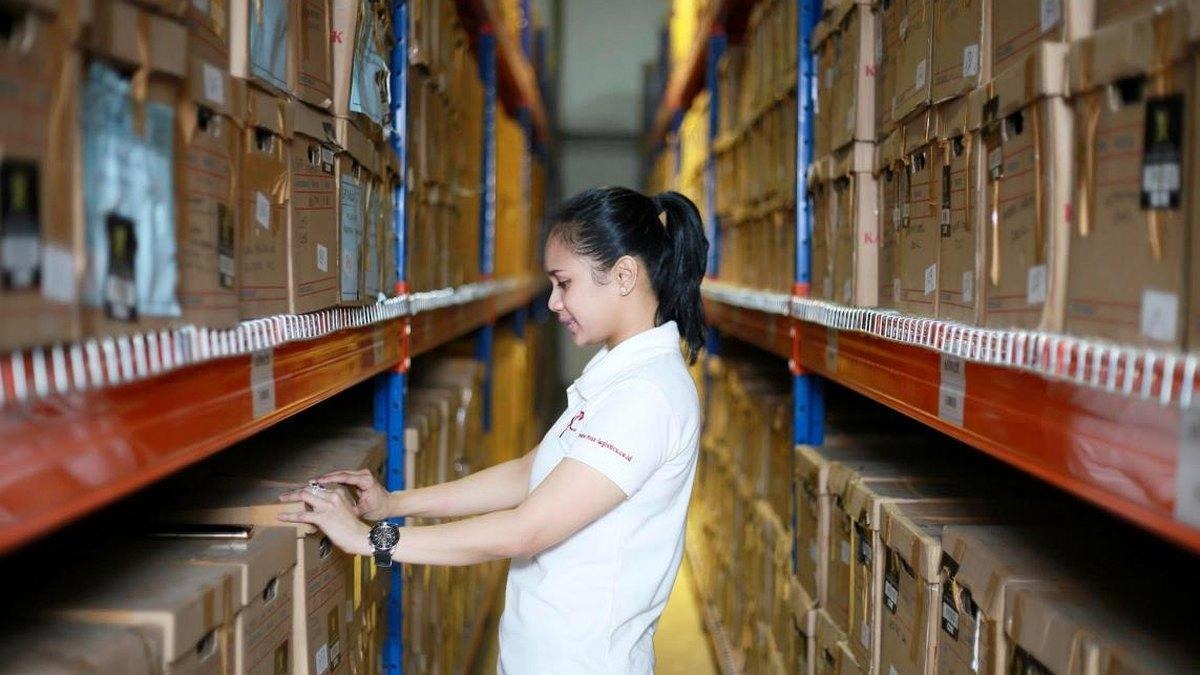
- Racking and labelling: each box should have a clear ID and location
- Insurance: ask what’s covered if something goes wrong
A professional provider will be happy to show you their facility and explain how it works.
Indexing and retrieval
Storing documents is only half the job. You also need to get them back when you need them, sometimes quickly.
Ask how the provider indexes boxes and files. Can they find a specific file, not just a box? How fast can they deliver a document to your office? Can they scan and email a file if you only need a copy?
A good system means you can ask for “the 2021 supplier contract with Company X” and get it the same day or the next day, instead of searching through dozens of boxes yourself.
Confidentiality matters
Multinational offices often hold sensitive information: salaries, personal data, legal cases, financial results. Make sure your provider has clear rules about who can access your boxes and how requests are approved. Many companies set up a short list of authorised staff who can request or collect files.
Secure destruction
When documents reach the end of their retention period, they need to be destroyed properly. Throwing them in the bin or selling them as scrap paper is a real risk. Ask if your provider offers secure destruction and a certificate to confirm it’s been done.
Getting started
Most companies begin by sorting their files into three groups: active (still used often), inactive (needed occasionally) and ready for destruction. Active files stay in the office. Inactive files go to storage. The rest can be destroyed safely after checking with your legal or tax advisor.
If you’re looking for a provider in Jakarta, take a look at the secure document storage service described here: https://max-logistics.co.id/document-storage/ . It’s a good starting point for companies that want to keep their records safe without filling up the office.
Final thoughts
Good document storage is one of those things nobody thinks about until an auditor asks for a file that can’t be found. By moving inactive records to a secure, well-organised facility, multinational offices in Jakarta can save space, cut risk and still get their documents back quickly when they need them.